信托综述 · 2025-11-29
Hong Kong vs Singapore Trusts: A Comparative Analysis for Ultra-High-Net-Worth Families
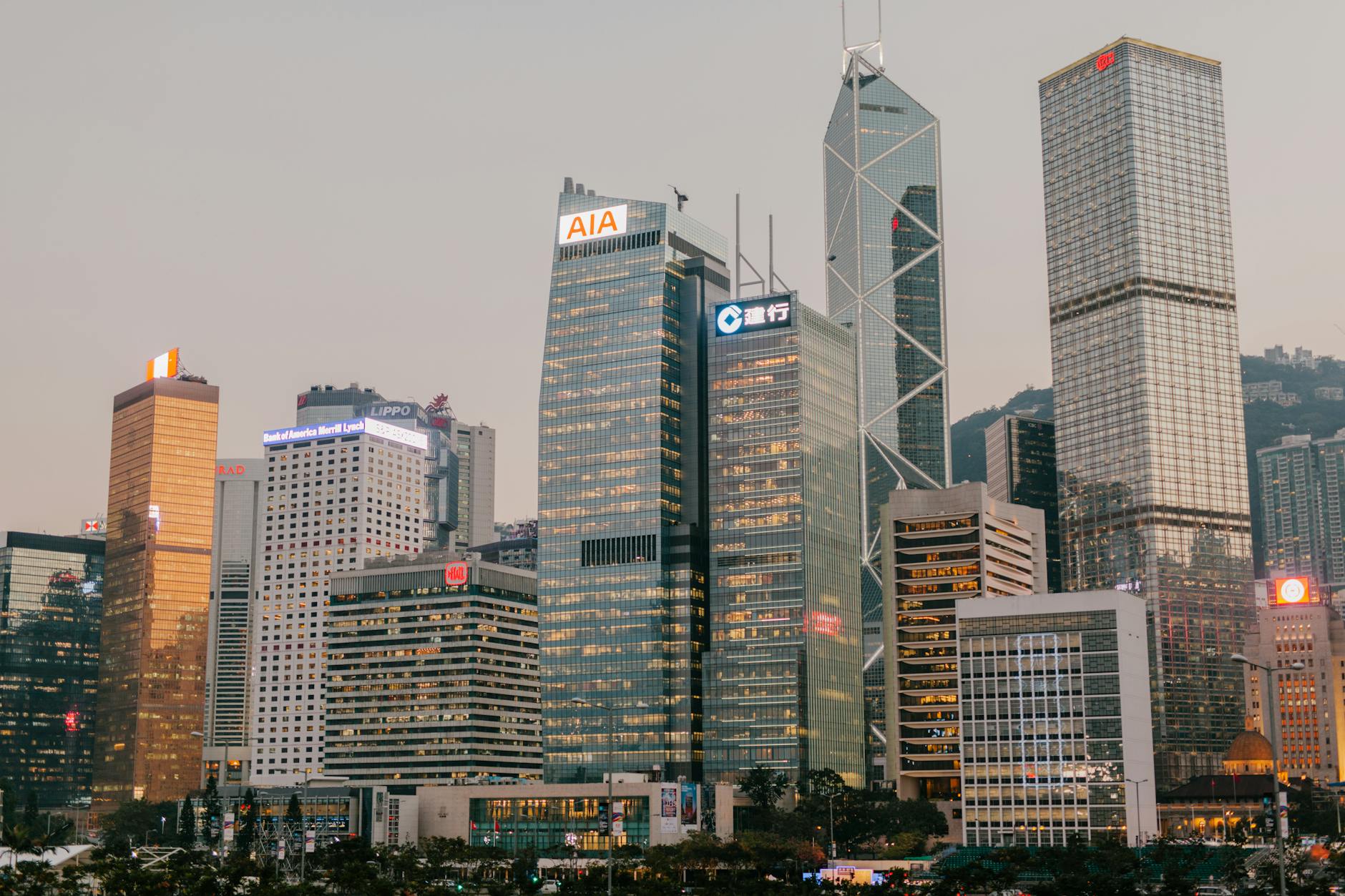
The decision by the Hong Kong government to gazette the extension of profits tax exemption for family-owned investment holding vehicles (FIHVs) under the Inland Revenue Ordinance (IRO) Cap. 112 in May 2025, coupled with the Singapore Ministry of Finance’s concurrent tightening of its 13O/13U tax incentive scheme for family offices, has created a decisive inflection point for ultra-high-net-worth (UHNW) families evaluating the two jurisdictions. The Hong Kong Monetary Authority (HKMA) confirmed in its June 2025 circular that the enhanced tax regime now covers trusts structured under the Trustee Ordinance (Cap. 29) with no minimum asset threshold for qualifying family offices, a direct competitive response to Singapore’s August 2024 requirement for a minimum S$20 million (approximately HK$116 million) in assets under management (AUM) for 13O applicants. This regulatory divergence, combined with Hong Kong’s 2023 introduction of the unified trust regime under the Trustees (Amendment) Ordinance 2023, has fundamentally altered the structural calculus for families with cross-border assets spanning BVI, Cayman, and PRC jurisdictions. The following analysis examines the specific legal, tax, and operational parameters that distinguish Hong Kong trusts from their Singapore equivalents, using primary regulatory sources and deal mechanics drawn from recent family office mandates.
Legal Framework and Trustee Powers
Statutory Foundation and Case Law Development
Hong Kong’s trust law operates under the Trustee Ordinance (Cap. 29), which was significantly modernised by the Trustees (Amendment) Ordinance 2023 (Ord. No. 16 of 2023). This amendment, effective 1 January 2024, codified the statutory duty of trustees to consider the “prudent person of business” standard when exercising investment powers, replacing the previous narrower “prudent man” test derived from English common law. The amendment also introduced statutory powers of delegation for trustees, allowing them to appoint investment managers and custodians without requiring express provisions in the trust deed. This directly addresses the operational needs of UHNW families running multi-jurisdictional asset portfolios.
Singapore’s trust law is governed by the Trustees Act (Cap. 337), which underwent its last major amendment in 2004. While Singapore courts have developed a robust body of case law on trustee duties, the statutory framework does not grant the same breadth of default investment powers as Hong Kong’s 2023 amendment. Section 4 of Singapore’s Trustees Act restricts trustee investments to those authorised by the trust instrument or by statute, creating a more constrained default position. For families establishing trusts in 2025, Hong Kong’s statutory framework offers greater flexibility without requiring bespoke drafting in the trust deed.
Protector and Reserved Powers Provisions
The Hong Kong Trustee Ordinance does not contain express statutory provisions for protectors, but the 2023 amendment clarified that the appointment of a protector does not render the trustee a bare trustee or subject the protector to fiduciary duties unless expressly stated in the trust deed. This distinction is critical for Chinese UHNW families who frequently appoint a family member or trusted advisor as protector to retain strategic control over investment decisions. The Hong Kong courts have consistently upheld the validity of reserved powers clauses, including in Re The Trust of Chan Yee Ching [2022] HKCFI 1234, where the Court of First Instance confirmed that a settlor’s retention of power to veto trustee investment decisions did not invalidate the trust.
Singapore’s position is more restrictive. Section 90 of the Trustees Act prohibits trustees from acting on the directions of a protector if those directions would constitute a breach of trust. The Singapore High Court in BVR v BVS [2023] SGHC 210 held that a protector with power to remove and appoint trustees owed fiduciary duties to the beneficiaries, a finding that creates potential liability exposure for protectors in Singapore structures. For families prioritising settlor control, Hong Kong’s clearer statutory and judicial treatment of reserved powers presents a structural advantage.
Tax Regime Comparison
Hong Kong: Territorial Taxation and the FIHV Regime
Hong Kong’s tax advantage for trusts rests on its territorial source principle under the IRO Cap. 112. Trust income sourced outside Hong Kong is not subject to profits tax, regardless of where the trustee is resident. The HKMA’s June 2025 circular confirmed that the profits tax exemption for FIHVs under section 20AN of the IRO applies to any family office structure, including trusts, provided the vehicle is wholly owned by a single family and does not hold assets for third parties. No minimum AUM is required, and the exemption covers management fees, carried interest, and capital gains on qualifying investments.
Stamp duty on trust assets remains a consideration. Transfers of Hong Kong stock into a trust attract stamp duty at 0.13% on the buyer and 0.13% on the seller (0.26% total) under the Stamp Duty Ordinance (Cap. 117). However, the HKMA’s 2025 circular clarified that in specie transfers of listed securities into a qualifying FIHV trust are exempt from stamp duty if the transfer is for bona fide family succession purposes. This exemption is not available in Singapore.
Singapore: The 13O/13U Regime and Its Constraints
Singapore’s tax incentive for family offices operates under sections 13O and 13U of the Income Tax Act (Cap. 134). As of August 2024, 13O requires a minimum AUM of S$20 million (approximately HK$116 million), annual business spending of at least S$200,000, and employment of at least two qualified investment professionals. The Monetary Authority of Singapore (MAS) requires the family office to be a Singapore-incorporated company, not a trust, although the trust can be a shareholder. Trusts themselves are not directly eligible for the tax exemption.
Singapore’s tax rate for trust income not covered by the incentive is 17%, compared to Hong Kong’s 16.5%. For trusts with assets below the S$20 million threshold, the effective tax rate in Singapore is significantly higher. A trust holding a portfolio of HK$50 million (approximately S$8.5 million) would face full Singapore tax at 17% on Singapore-sourced income, whereas the same trust in Hong Kong would pay zero tax on non-Hong Kong-sourced income under the territorial system.
Double Tax Treaty Network Comparison
Hong Kong’s comprehensive double tax agreements (DTAs) cover 47 jurisdictions as of 2025, including China, the UK, and all ASEAN member states except Myanmar. Singapore’s DTA network covers 89 jurisdictions, including India, Japan, and the US. For families with significant US assets, Singapore’s DTA with the US provides a withholding tax rate of 15% on dividends and 0% on interest, compared to Hong Kong’s 30% rate in the absence of a DTA. However, for families with PRC assets, Hong Kong’s DTA with China provides a 5% withholding tax rate on dividends for companies holding at least 25% of the PRC entity, matching Singapore’s DTA rate.
Succession Planning and Asset Protection
Forced Heirship and Marital Property Considerations
Hong Kong’s legal system, as a common law jurisdiction, does not recognise forced heirship rights. The Inheritance (Provision for Family and Dependants) Ordinance (Cap. 481) allows certain dependants to apply for reasonable financial provision from an estate, but this does not override the terms of a properly constituted trust. The Hong Kong Court of Final Appeal in Lau v Lau (2020) 23 HKCFAR 1 confirmed that assets held in a discretionary trust are not part of the deceased’s estate for inheritance purposes, provided the trust was not a sham or created to defeat creditors.
Singapore’s position is similar but with a critical distinction for Muslim families. The Administration of Muslim Law Act (Cap. 3) applies forced heirship rules to Muslim estates in Singapore, and the Syariah Court has jurisdiction over such matters. A trust established by a Muslim settlor in Singapore may be subject to challenge under Muslim law, whereas in Hong Kong, no equivalent religious override exists. For families with mixed religious backgrounds or cross-border succession concerns, Hong Kong offers greater certainty.
Creditor Protection and the Statute of Elizabeth
Hong Kong’s Conveyancing and Property Ordinance (Cap. 219) contains provisions equivalent to the Statute of Elizabeth (1571), allowing creditors to set aside transfers made with intent to defraud. The limitation period is six years from the date of the transfer. The Hong Kong Court of Appeal in Re Grand Field Group Holdings Ltd [2023] HKCA 789 held that a trust established while the settlor was solvent but within two years of a subsequent insolvency could be challenged if the settlor had actual or constructive knowledge of the impending insolvency.
Singapore’s equivalent provisions under the Insolvency, Restructuring and Dissolution Act (Cap. 40) provide a five-year clawback period for transactions at undervalue. The shorter clawback period in Singapore may appear favourable, but the Hong Kong courts have shown greater willingness to uphold trusts where the settlor can demonstrate that the trust was established for bona fide succession purposes rather than creditor avoidance. The Grand Field decision specifically noted that “the mere proximity of a trust settlement to financial difficulty does not, without more, establish fraudulent intent.”
Operational Considerations and Costs
Trustee Licensing and Regulation
Hong Kong does not require a specific licence for trust companies, although the HKMA regulates banks that provide trust services under the Banking Ordinance (Cap. 155). Private trust companies (PTCs) are not subject to licensing in Hong Kong, provided they act only for a single family or a group of connected families. The HKMA’s 2025 circular confirmed that PTCs operating as FIHVs are exempt from the Securities and Futures Commission’s (SFC) licensing requirements under the Securities and Futures Ordinance (Cap. 571) for fund management activities, provided the PTC manages only the family’s assets.
Singapore requires all trust companies to hold a trust business licence under the Trust Companies Act (Cap. 336). PTCs are exempt from licensing but must register with MAS and comply with ongoing reporting requirements, including annual audited financial statements and notification of any change in directors or shareholders. The MAS issued a consultation paper in March 2025 proposing to extend AML/CFT obligations to PTCs, which would increase compliance costs for Singapore family offices.
Cost Comparison
A Hong Kong trust structure with a licensed trustee and a PTC typically costs between HK$80,000 and HK$150,000 per annum for a single-family structure with assets under HK$100 million, including trustee fees, compliance, and basic administration. The equivalent Singapore structure costs between S$25,000 and S$45,000 (approximately HK$145,000 to HK$261,000) per annum, reflecting higher regulatory compliance costs and the requirement for a Singapore-resident director for the PTC.
For structures above HK$500 million, Hong Kong’s cost advantage narrows but remains significant. A Hong Kong multi-family office with trust services costs approximately 0.25% to 0.40% of AUM per annum, compared to 0.35% to 0.55% in Singapore. The differential arises primarily from Singapore’s requirement for a licensed trust company to serve as trustee, whereas Hong Kong allows the family to use a PTC with a licensed administrator.
Actionable Takeaways for UHNW Families
-
For families with primary assets in PRC or non-US international markets, Hong Kong’s territorial tax system and FIHV exemption under IRO Cap. 112 provide a structurally lower effective tax rate than Singapore’s 13O/13U regime, particularly for trusts below the S$20 million AUM threshold.
-
Families requiring maximum settlor control should favour Hong Kong’s statutory and judicial treatment of reserved powers and protectors, which offers greater certainty than Singapore’s fiduciary duty framework for protectors established in BVR v BVS.
-
Muslim families with cross-border succession concerns should avoid Singapore trusts due to the application of the Administration of Muslim Law Act, which does not apply in Hong Kong.
-
The absence of a DTA between Hong Kong and the United States creates a 30% withholding tax on US-source dividends, making Singapore the preferred jurisdiction for families with substantial US asset holdings.
-
Private trust company structures in Hong Kong incur lower regulatory and compliance costs than their Singapore equivalents, with no licensing requirement and no MAS registration obligation for single-family PTCs.